


Delegate Q&A
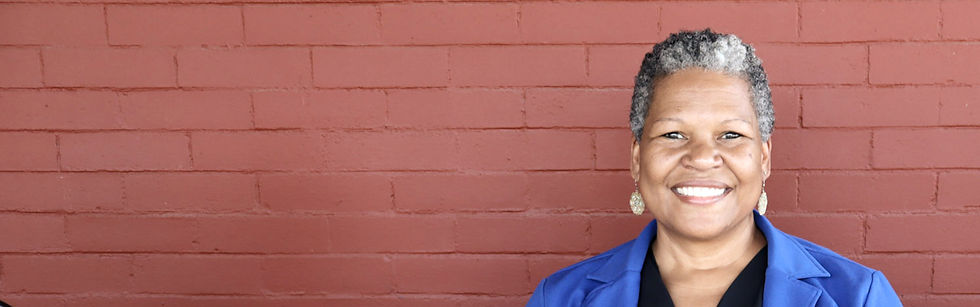
Michelle Maldonado is the state Delegate for the Virginia House of Delegates, 20th District (HD-20) which includes the Cities of Manassas and Manassas Park, and a portion of the western end of Prince William County..
Table of Contents — Jump to a Topic
WHY I SERVE IN THE VIRGINIA HOUSE
Question: Can you tell me a little bit about what originally inspired you to run for office and get involved in politics?
Michelle Maldonado: I love this question because I think there are these pivotal moments in people's lives where they think, "how can this be happening and what can I do?"
There were three moments for me that led up to me making a decision to run, and I had never had any ambition to be in politics.
-
The first thing that happened was around 2016 when we were learning about child separation at the border. As a mom, that was just heartbreaking.
-
I could only imagine what it would feel like for my child to be separated from me.
-
I thought, "Where are the people that are going to stand in the middle and stitch together this fabric that keeps tearing that is our nation?"
-
Shortly after that, I got a call from Customs and Border Protection to help keep some humanity in this awful situation
-
-
Fast forward a couple months, and then there were the murders of Ahmaud Arbery, Breonna Taylor, and George Floyd.
-
As a mom, seeing a man who could be my son crying out for his mother, it gutted me!
-
I again thought, "Where are the people?"
-
I got a call from folks in Minneapolis to help community leaders heal and recover before the trial.
-
-
The third thing that happened was the insurrection at the Capitol on January 6th.
-
I said, "That's it. I'm done. Maybe I'm one of the people they’re looking for."
-
I ran for office.
-
Question: What's so important about the 2025 election in Virginia?
Michelle Maldonado: One of the questions I get asked all the time is, "how does a bill get passed in Virginia, and why does it take so long?"
The answer is nuanced. Here is the process:
-
Often, a bill idea comes from a constituent who approaches a legislator with a concern
-
The legislator says, "I think we can write a bill to help address this issue"
-
The bill gets assigned to a committee, then a subcommittee
-
If it passes there, it goes to the full committee
-
If it passes the full committee, it goes to the floor
What confuses people all the time about Virginia is how many times a bill gets voted on the floor.
-
It's presented on the floor three times
-
The first time is a heads up
-
The second time is when the patron carrying the bill gets to speak to it, and opponents can speak against it
-
The third time is when they vote.
-
If it passes, say, in the House of Delegates where I sit, it "crosses over" to the Senate, and the process starts all over again.
-
If it passes the Senate, it goes to the governor's desk to be signed, vetoed, or amended.
-
If the governor does nothing, it becomes law.
I'll give you an example. This year, we passed three constitutional amendments in the General Assembly: reproductive freedoms, marriage equality, and automatic restoration of voter rights.
-
The Virginia Constitution requires that, in order to amend it, a bill has to be passed in one General Assembly session and then also in the next subsequent session
-
There has to be an intervening election between those two consecutive sessions
-
This year, there is an election, so these amendments can go forward
-
If it is passed next year, it then goes to the voters
-
It becomes a referendum on the ballot on election day, and then it's the voters who decide whether these three amendments to the constitution pass
Another way…
-
Is through reenactment clauses that require something to be passed again after a certain period
-
A third way is that a committee may not want to kill a bill but feels more work is needed, so they will pass it on to the next session.
Question: Why is the process of passing a bill in Virginia so complicated? Can you explain it?
Michelle Maldonado: Absolutely, because a lot of people don't know that it's not me voting on whether we get that bill passed. It's them. It’s the voters.
The power is in their hands, which is another important reason why they need to vote.
Question: What about affordability? What have you done, and what are you doing about it? What's most important to focus on regarding this issue?
Michelle Maldonado: One of the issues everybody's struggling with is affordability.
-
Just being able to afford our daily expenses, the things that we have on the horizon, is a challenge because many people are "one unexpected hiccup away from a crisis."
-
We don't have the same kinds of cushions in our bank accounts that we may have had in the past
-
We’re experiencing many layoffs because of federal reductions in the workforce – this is not just federal employees; it's the contractors and the ecosystem that supports them, like small business owner
So I am asking:
-
How do we make sure we're ensuring that grocery stores aren't able to create monopolies around pricing?
-
How do we make sure people are able to get the kind of healthcare access and affordability they need? We can work with our committees to ensure that programs and funding are in place for that
-
We are looking at potentially huge hits to our Medicaid and SNAP, which is food and healthcare right at the kitchen table – we need to make sure people don't get lost in the system, especially if we don't have federal funding to address these issues.
Question: What about housing affordability?
Michelle Maldonado: When we talk about affordability, housing is such a big component of that.
-
Housing in Northern Virginia is extremely expensive. It's priced out for many people to even buy a home or to rent a space large enough to comfortably house a family.
As a child, I experienced several years in elementary school where we lived in a camping trailer.
-
It wasn't a mobile home; for us, that would have felt like a palace.
-
It was a kind of camping trailer that you hook up to your truck, and that was my home for several years because we couldn't afford more.
In my district now, we have two mobile home communities where people cannot afford rent, let alone make the move into first-time home ownership.
-
There is no good reason why our housing inventory is so low
-
The certainty of a job or securing employment is so tenuous that folks can't even figure out if they can put a safe, clean, and secure roof over their heads
-
If you don't have a safe place to go after school or a safe place to put your head on a pillow at night, it's hard to learn in school
-
It's hard as a parent to perform at work if you're so worried about your child
There is also an economic component to business and the community. If we can't provide basic housing for our people, companies won't want to come here.
We have to think outside the box. We need to start thinking about different kinds of developments.
-
Modular homes.
-
Tiny homes.
-
Differences in the mobile home and manufactured housing community
-
Developments that inspire home ownership instead of just leasing
Creating more starter homes and smaller homes that we used to do when home ownership was more accessible.
-
The cost of these homes would not be such a barrier.
-
We also have to work with developers to make sure the ordinances and the processes are much easier and more streamlined to cut down construction costs.
Question: What are your thoughts on education and what have you done in that arena? Why is education important and what's next for it in Virginia in your opinion?
Michelle Maldonado: When you think about housing, you can't help but also think about education.
Education is one of the great equalizers, and nobody can take your education away. I like to say, "When you learn something, you can't unlearn it."
-
Both my parents were educators, my grandparents were educators, and my father was a math teacher.
-
My grandmother was the first Black teacher and Black principal in Cape Cod, Massachusetts, and my grandfather was an instructor for the Tuskegee Airmen.
I mentioned how if we don't have good housing, companies won't come because their employees won't have places to live. The same is true about our school systems.
In Virginia, we are fast holding on to the idea that the public school system is a wonderful system, but it has its problems and needs investment.
-
We've had challenges with polarization in our communities and our nation about defining proper history standards
-
What is it that we tell and teach our children in age-appropriate ways?
-
What are the choices we have around using public school systems as the primary way to teach our children, or having vouchers and other opportunities?
-
We also want to make sure that we continue working hard to also educate parents, not just the children
Importantly, we want to make a space where parents' voices feel heard as part of the process. One of the things we hadn't done so well is that parents hadn't felt that their voices were heard because they weren't aware of what the processes were. That's on the folks who need to make sure that parents have the information they need.
Question: What are your thoughts about social media and AI? And is your professional background helpful here given how important AI is to the future?
Michelle Maldonado: There's been a lot of talk over the last several years about the mental health harms we're seeing.
Research is proving a direct causal correlation between the use of social media in our young kids and young adults and things like addictive feeds or addictive scrolling
When I started my career, I was a tech lawyer working on consumer data privacy. Then I moved to the business side in tech and learned firsthand how the back end is designed.
-
The front end is the user interface, but the back end is the platform, construction, architecture, and design
-
The algorithms are intentionally created to ensure the longest possible engagement for each individual
-
We know there is intentionality around the way these things are designed to keep people engaged
I don't know, quite frankly, if technology industry entrepreneurs, their financial backers, or their software and web developers understood the extent of the harm that could result over time.
-
Steve Jobs didn't even let his kids use any of the technology
-
Many technologists who designed these platforms don't allow their own children to use them because of the addictive nature
We have to be a little bit more proactive now because we did not take enough action.
-
We didn't establish proper guardrails or frameworks for social media platforms
-
At the federal level, Section 230 immunity gives immunity to a lot of these social media platforms
-
This has created an environment where our kids are hyper-addicted to devices, which is detrimental at school, at home, or when trying to go to bed
-
We need to do more.
All of this gets exacerbated by the newest technology, artificial intelligence (AI).
-
AI is not new; chatbots have been around for a long time
-
The difference is the swiftness of the evolution of the technology — which didn't previously exist in the way that it does now with generative AI
-
With these underlying technologies threading through platforms, the ability to capture attention is even more powerful
We need to protect our children while allowing them to express their creativity.
-
We need to put proper guardrails and frameworks around the use of AI
-
This includes the collection, aggregation, and sale of our private information and related data
-
So I brought forward legislation to help address some of the adverse impacts and unintended consequences of AI
These don't feel like kitchen table issues to most people, but they are.
-
When I say to people, "Do you know what agentics is? Have you engaged with an ‘AI agent’?”
-
They say no.
-
I say, "bet you have. Have you used Amazon Alexa? That's an agent. Have you used Apple Siri with your iPhone? That's an agent."
These agents are becoming much more sophisticated and have access to much more information.
-
It's a horizontal issue that cuts across everything
-
AI impacts healthcare, loans, and selections for jobs
-
It is only going to be more so over time
We also have to prepare people to work and live in a world that has so much more artificial intelligence integrated into it.
Question: What are your thoughts on consumer protections?
Michelle Maldonado: There are a couple of things I'm really proud of that I was able to work on. The majority of these efforts came from constituents and families in Virginia who were trying to protect folks.
Through the technology lens, I was able to pass Virginia's very first online child data privacy act.
-
The tricky thing is a federal law on the books for child online privacy doesn't cover all the gaps
-
We had to be careful not to create expanded requirements that then conflicted with federal law, because it would just end up in court
-
We worked really hard to plug some of the loopholes to protect our kids
Also in the kids' space, I understand the concept of toxic heavy metals in our foods.
-
A lot of people don't know that we are ingesting things like lead, cadmium, arsenic, and mercury
-
It's in the food that we ingest as adults, but it's also in our infant formula and toddler foods
-
Many people may not know that this is regulated at the federal level
As a state, we don't have the authority to regulate and require certain things.
-
But we do have agency around what shows up on our labels
-
We wanted to force the issue, replicating a law done in Maryland inspired by a family's experience of having ingested highly contaminated applesauce with lead in it
-
We were able to pass the Baby Food Labeling Act that addressed toxic heavy metals in baby food
Once lead gets in your system, it doesn't wash out.
-
Our children's brains and nervous systems are developing, and lead, mercury, cadmium, and arsenic all impact that development
-
The law we passed requires manufacturers who sell baby food in Virginia to have a QR code on the back of the products
-
The QR code links to a page on their website that gives the batch testing information for that specific product
-
This tells the purchaser how much cadmium, lead, arsenic, and mercury are in that particular product
-
This gives people an opportunity to say, 'I'm not buying that for my kid'"
At the federal level, these are just guidelines. We figured that transparency, and "putting the power and authority into the hands of parents," would empower them to choose differently for their kids.
Another area where I’ve been proud to help in the consumer protection space is creating protections for our elders and vulnerable adults.
-
We had a tragic story come to our office where a scam artist accessed a US Naval Officer who had served our country
-
He had a stroke and was having some cognitive challenges
-
The scam artist was able to persuade him to wire over $3 million to them outside of the country
-
People were sounding the alarms, but there weren’t enough teeth in the laws to help protect him
We were able to bring forward "Larry's Law," which we passed in partnership with banks, credit unions, AARP, and others.
-
The law puts into place training for banks and credit unions across Virginia on how to detect fraud
-
The Virginia Bankers Association has begun rolling out their training
-
The second part of that law directed the Bureau of Insurance to establish statewide guidelines for our financial institutions
This year, I partnered with law enforcement to do an additional part to "Larry's Law."
-
What we learned from our law enforcement partners was that when you do fraud investigations, the money is gone by the time you're finished
-
There was no mechanism to protect the assets while the investigation proceeded
-
We were able to pass a law to put a process in place for law enforcement and courts to be able to protect those assets so they wouldn't be depleted
In addition, I partnered with Senator Adam Eben on the Senate side.
-
He brought a bill in the Senate, and I brought the same bill in the House to address unscrupulous real estate brokers
-
The brokers were tricking consumers into believing the brokers were only using consumer’s data for a moment in time, but then the brokers were putting a lien in place on that consumer’s credit / mortgage that might last for 30-plus years
-
We were able to pass legislation to outlaw that practice going forward
-
For any bogus liens that those brokers had put on the books, they were unenforceable — further protecting people from those scams in their houses
In the healthcare space, I was able to pass a law regarding prior authorization.
-
Prior authorization is approval from your health insurance that you need before your doctor performs a medical service
-
People were left in limbo because there was so much time taken where there was no response from an insurance company despite repeated attempts by doctors to get authorization
-
We designed legislation requiring that regular prior authorizations receive a response within seven days
-
If it's an expedited one, they have to be responded to within 72 hours
-
Folks will be very glad this is in place if they have an accident and need surgery, or as they and their parents age
KEY ISSUES OF THIS ELECTION
Question: Why should people be inspired to actually take action now? What can they do?
Michelle Maldonado: In these moments, people feel so overwhelmed. They feel like this is so big. They don't know what to do or how to exercise their own voices.
I like to remind people that there's always something we can do, no matter how small.
-
Being a good parent to your children.
-
Being kind at the grocery store.
-
Showing compassion.
-
Listening, not demonizing or dehumanizing someone.
These acts are contagious and plant seeds that water inside the person interacting with you.
I'll give an example: when we were all dealing with COVID, and it was following the murder of George Floyd, I didn't want my son to think he had no agency or power.
-
Our family put together an open letter to humanity to show our son that "there's always something you can do."
-
We didn't anticipate the letter would go all the way around the world, be used by boards of directors, schools, or even our own U.S. government agencies as a framework. But it was.
-
It was a way for us to say, "we can't sit silently."
-
Action can be as simple as being kind to a neighbor or as grand as using your privilege to dismantle unfair privileges.
Question: How about specifically in Virginia or on your campaign?
Michelle Maldonado: There are so many things people can do right now in their backyards, in our district, on our team. Making phone calls to people who are afraid to go to the polls or who feel disillusioned. I call this deep canvassing and deep conversations, and we need to do a lot more of it.
-
If you're comfortable with phone banking, knocking on doors, or helping with digital media to ensure conversations are happening, you can do that.
-
There's always those things that require funding.
-
You could host conversations in your home or community, because we absolutely need people to feel connected to one another and to the issues that matter.
-
This also gives them hope that there is a possibility to come to a good outcome for themselves and their families.